
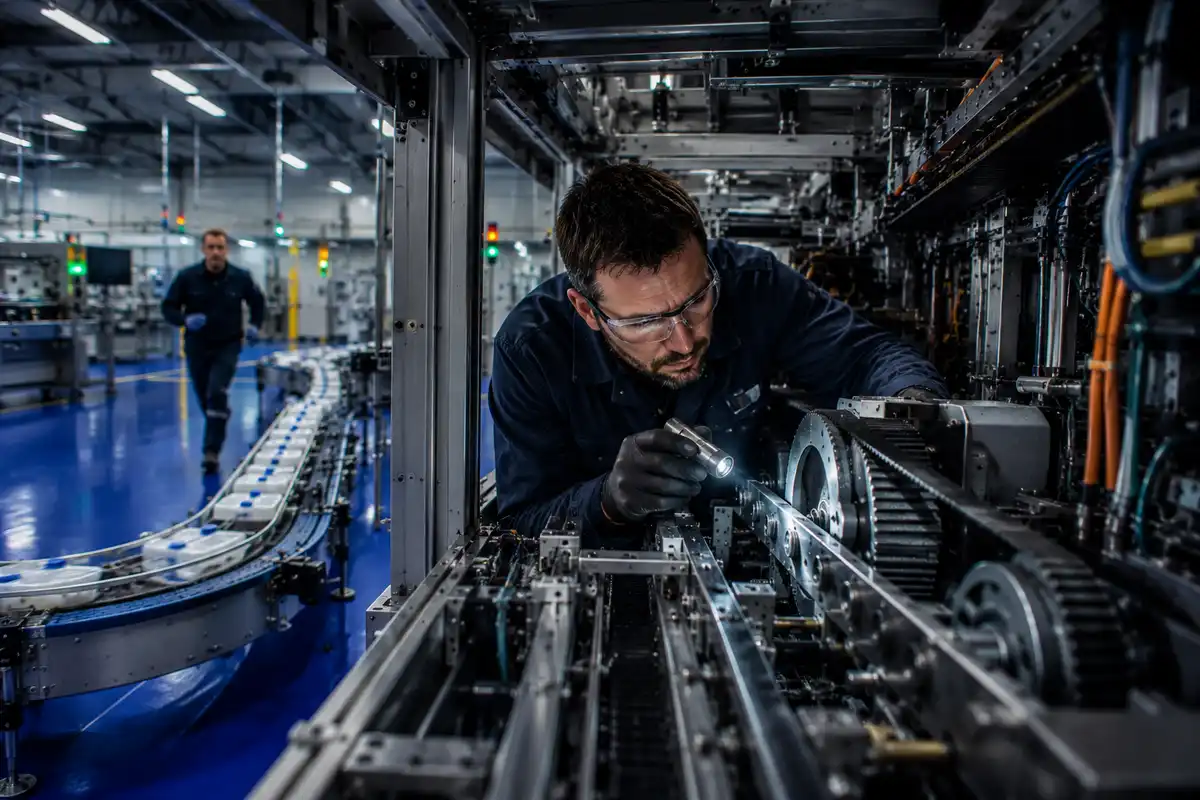
“The machine stops every 10 cycles but I don’t understand why.”
THE CHALLENGE
A fault that kept coming back – even after the drive was replaced.
On a busy FMCG production line running ELAU PacDrive technology, something was wrong. The machine was stopping every 10 cycles. The engineers knew there was a fault — the controller was telling them that much. What it wasn’t telling them was what was actually causing it.
The standard response on any PacDrive site: identify the drive flagging the error and replace it. The team did exactly that. The MC-4 drive linked to the fault was swapped out. The machine restarted. And then — stopped again. This time every 20 cycles instead of 10.
"I was surprised how quickly DMC were able to get to the bottom of the problem."
— Site Engineer, FMCG Production Site, UKTHE DIAGNOSIS
10 minutes. One tool. Root cause identified.
When the DMC engineer arrived on site, they connected PacDriveAssist directly to the PacDrive controller. Within minutes, the full picture was visible — not just the active fault, but the complete chain of events leading up to each stop across the previous cycles.
The current trace was the giveaway. Each time the machine approached cycle 10, the current draw on a specific axis was spiking to overcurrent — not because the drive was failing, but because something mechanical was forcing it beyond its limits. PacDriveAssist pointed straight to the axis and the pattern. The next question was: what was causing the mechanical load spike?
The answer: a pulley that had jumped a tooth. A small mechanical displacement — invisible to the naked eye, and completely invisible to any sensor-based system that wasn’t reading directly from the drive’s internal current data.
HOW PACDRIVEASSIST SOLVED IT
Three steps. No guesswork.
Connected directly to the PacDrive controller
PacDriveAssist established a read-only connection to the C200 controller — no hardware, no sensors, no impact on live operations. The full fault log and historical drive data was immediately accessible. No laptop, no cable hunting, no disruption to the line.
Surfaced the overcurrent pattern across multiple cycles
The current trace data showed a repeating spike on the same axis at the same point in every cycle. This is information the HMI never displayed and that no engineer on site had ever seen before. The pattern was unambiguous — and it told a very different story to the fault code alone.
Pointed to the mechanical fault — not the drive
The current overload data directed the team away from the drive entirely and straight to the mechanical components on that axis. A pulley had jumped a tooth — forcing the drive into overcurrent protection every 10 cycles. The fix was mechanical, not electrical. The MC-4 drive that had already been replaced was returned to stores unused.
WHAT THIS CASE DEMONSTRATES
The fault wasn’t electrical. No sensor would have found it.
This case highlights the core difference between sensor-based monitoring and direct PLC intelligence. An external sensor on the drive would have confirmed the overcurrent trip — it wouldn’t have told you why it was happening, which axis, or what the current trace looked like in the cycles before the fault.
Sensors sit on the outside of the machine. PacDriveAssist reads from inside the controller — from the same data the PLC uses to make decisions. That’s a fundamentally different level of visibility. It’s the difference between knowing a trip happened and knowing why it happened, on which axis, and what the machine was doing in the moments before it.
The wrong part had already been replaced before PacDriveAssist was connected. That’s a cost that could have been avoided entirely. With the right data available from the start, the team would have gone straight to the mechanical inspection — and had the machine back on the same shift without the wasted part.
THE OUTCOME
£70,000 in avoided costs. Machine back in production the same shift.
✓ Root cause identified in 10 minutes — from connection to the PacDrive controller to confirmed diagnosis
✓ Mechanical fault identified, not electrical — a jumped pulley tooth causing cyclical overcurrent on a specific axis
✓ Replaced drive returned to stores unused — the correct fix cost nothing in parts
✓ £70,000 in downtime costs avoided — machine back in production the same shift
✓ Engineers now understand the pattern — the fault history stays in PacDriveAssist for future reference
No parts incorrectly replaced.
Machine back in production — same shift.
"I was surprised how quickly DMC were able to get to the bottom of the problem. The machine had been stopping every 10 cycles for days — we thought it was the drive. It wasn't even electrical."
— Site Engineer, FMCG Production Site, UK